Volodymyr Mykolaiovych Vladko
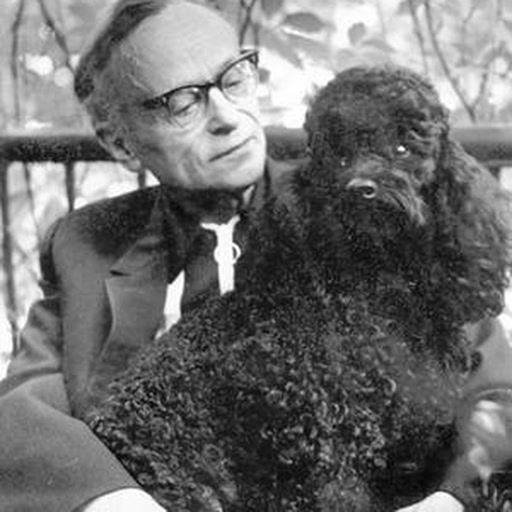
Birth: December 26, 1900 (January 8, 1901, New Style), St. Petersburg, Russian Empire Death: April 21, 1974, Kyiv, Ukrainian SSR Birth name: Volodymyr Mykolaiovych Yeremchenko Occupation: Science fiction writer, journalist, radio host Languages: Ukrainian Notable Works: Argonauts of the Universe, Aerotorpedoes Turn Back, Robotari Are Coming (Iron Mutiny), Raketoplan S-218 Affiliations: Union of Soviet Writers
Biography
Early Life and an Accidental Pen Name
Volodymyr Vladko was born Volodymyr Mykolaiovych Yeremchenko in St. Petersburg, the son of a printing-house technician and a midwife. He lost his father at fifteen and supported his family — a younger sister and two brothers — through newspaper piecework, tutoring, and copying work while still a teenager; his first publications date to December 1917. Between 1917 and 1921 he worked for the Voronezh Commune newspaper and headed the propaganda department of the news agency Tsentropechat.
In 1921 he moved to Kharkiv, then the capital of Soviet Ukraine, and worked for a decade as a journalist. It was there that a compositor's error truncated his byline "Владимир Еремченко" down to "Владко" — first recorded in Kharkivskyi Proletarii on 14 November 1926. The printer's accident gave Ukrainian science fiction one of its most durable pen names.
War, Journalism, and Later Career
Vladko's 1941 anti-fascist novel Syvyi Kapitan (The Grey-Haired Captain) lost its manuscript in the chaos of the war's opening months; he rewrote it only after 1956. During the war he served as a political commentator for Ukrainian-language radio in Saratov, then as a correspondent for the Soviet Information Bureau and Pravda, chairman of the Ukrainian SSR's chief repertoire committee (1947–51), and head of the Ukrainian section of Literaturna Hazeta (1951–56). He joined the Communist Party in 1944.
Only in 1956 did he return in earnest to science fiction, revising Argonauts of the Universe and producing further novellas. For nearly two decades he also hosted the children's radio program Besidy Profesora Hlobusa (Conversations with Professor Globus). He received two Orders of the Badge of Honor and, in 1973, the "Golden Cosmonaut" prize in Poznań. He married three times; his third wife, the poet and translator Maryna Vladko-Rekun (1930–2010), was senior literary editor of Vsesvit and donated his archive to the National Museum of Literature of Ukraine.
The Destroyed Novel
Aerotorpedoes Turn Back (Аероторпеди повертають назад) was printed by the children's publisher Dytvydav in 1934 in a run of 10,000 copies, then withdrawn and destroyed almost at once. It vanished from Soviet bibliographies, went unmentioned in later surveys, and Vladko never spoke of it publicly. Only in 2015 did the Kyiv bibliographer Vyacheslav Nastetsky track down a surviving copy; two or three are now known to exist.
The paradox is that the book is not oppositional or even ambiguous. It carries epigraphs from Stalin and Voroshilov and reproduces every cliché of early-1930s Soviet defence propaganda. A coalition of capitalist states — "Schwabia," "Great Saxony," and "Osteria," transparent masks for Germany, Britain, and Austria — attacks the USSR at four in the morning with an air strike, a detail that now reads as an eerie foreshadowing of 22 June 1941. Their secret weapon is the radio-controlled aerotorpedo, invented by the scientist-general Maurice Renoir, a representative of French fascism. The finale is obligatory: the capitalist rear collapses, revolution breaks out in Schwabia, regiments defect under red ribbons, Renoir shoots himself. It was a model text, not a faulty one — which is why its destruction is so revealing. The norm had moved faster than the book could travel from typesetter to bookshop.
Two explanations suggest themselves. The first is diplomatic. Vladko wrote in 1932–33, when the expected future was an imperialist crusade on the USSR. By the time the book appeared, Soviet policy had turned: non-aggression pacts with Finland (1932, extended in 1934) and Poland (1932), diplomatic relations with Romania in June 1934, entry into the League of Nations that September, mutual-assistance treaties with France and Czechoslovakia in 1935. Against that background, a children's novel whose bombers take off from Finnish-coded Kustamyaky, whose offensive starts from Romanian Braeshtov, and whose villain is a French general in a swastika cap had become compromising. Future-war fiction functioned as semi-official discourse; naming countries as staging grounds was read abroad as an index of the real mood in Moscow. Nikolai Shpanov's The First Strike (1939) met the same fate — heavily promoted, then rapidly withdrawn.
The second concerns the ending. Revolution in the enemy's rear was the canonical close of the Soviet war-utopia, a legacy of the doctrine of revolutionary war. That norm was also shifting: the 7th Comintern Congress of 1935 adopted the Popular Front line and effectively retired the slogan of world revolution, and in March 1936 Stalin publicly dismissed the "export of revolution" as nonsense. Vladko's own revision records the change. Reworking the material for 12 Stories (1936), he retitled the fragment "Aerotorpedoes Turn to the West." The launch site is untouched — still Kustamyaky — but the enemy is renationalised: the French general is deleted, the Romanian base disappears with him, and the aerotorpedo force is commanded entirely by Germans. The weapon no longer turns against a multinational bloc through a rebellious world proletariat; it simply flies toward a single, named enemy.
Argonauts of the Universe
Finished in 1933 and held up by censors wary after the previous ban, the novel was serialized from January 1935 and rushed into book form that October. The print run of 20,000 is striking: the average Ukrainian-language book then ran about 7,500 copies, and Smolych's Doctor Halvanesku's Estate had managed 10,000. Dytvydav printed 23,000 more in 1936 and 11,000 in 1938. It went through six Japanese editions, and the cosmonaut Pavlo Popovych later called it "the primer of cosmonautics," struck by how precisely Vladko had foreseen weightlessness.
The expedition to Venus hunts a rare element, "ultragold," which Vladko defends inside the novel by citing Mendeleev's periodic table; the crew also finds "infraradium," an inexhaustible energy source. The ideological register is unmistakable — the red flag is raised on Venus and mentioned twenty-six times in the text, the crew sings the Soviet anthem on an alien mountainside, and the first toast is "to the great Soviet Motherland." The crew is multinational in origin but uniformly Soviet in citizenship, and Vladko splits credit for the rocket fuel between Leningrad and Kyiv institutes, subordinating Ukrainian pride to a pan-Soviet achievement even in a Ukrainian-language novel.
What the novel conspicuously lacks is intelligent alien life. Smyrniw reads this as deliberate: contact with an advanced civilization might outshine Soviet achievement, and Marko Kapiy's contemporaneous Country of Blue Orchids, whose Mars holds a humanoid civilization descended from Atlantis, shows the road not taken. There may be a further reason for the caution. Alexei Tolstoy's Aelita (1923) had staged a communist revolution on Mars, its soldier Gusev insisting the planet be annexed to the Russian Federation — precisely the sort of interplanetary permanent revolution that became dangerous under Stalin. Vladko's solution is consistent: the local proletariat makes its own revolution once a powerful enough invention reaches its hands. Communism arrives not by export but as the direct consequence of technological progress.
The critics were not kind. Anatoly Britikov judged that characters "with their empty bickering and flat little jokes can hardly be classed among 'the best part of humanity,'" and Elena Kozmina cites the novel as her example of what minimal genre variation produces: an impoverished structure. A later irony sharpened the point — Soviet probes from 1967 found Venus to be carbon dioxide at roughly 475°C, making Vladko's jungles impossible and his earnestly argued "scientific truth" itself period-bound.
Robotari Are Coming
Vladko's first full-length science fiction is set among the American working class. Factory owners deploy radio-controlled robot strikebreakers; with covert Soviet assistance the strikers learn to overwrite the robots' control signals and turn the machines on their owners. Smyrniw finds Vladko's robotari deliberately crude — "iron monsters" without consciousness — where Čapek's R.U.R. robots are granted tragic interiority and Edmond Hamilton's The Metal Giants (1926) have independent electronic minds. The crudeness is the point: the machines never have enough interiority for the ending to read as a contest between man and machine. The real contest is between capitalist ownership and Soviet-aided revolution, the robots merely the terrain on which an older conflict is restaged.
Literary Method
Commemorative literature repeatedly calls Vladko the "Ukrainian Jules Verne," recognizing his insistence on technological plausibility — he revised his fiction across decades to keep pace with science, at one point deleting a reference to "electronic lamps" once vacuum tubes were superseded. But the label understates a second, Wellsian axis: future war and social extrapolation. Verne's heroes are indifferent to ideology and Wells's extrapolations are usually warnings; Vladko fuses the two and inverts the valence. Soviet science and Soviet social organization become proof of one another — the same competence that makes the rocket fly guarantees the revolution succeeds.
Smyrniw credits Vladko, with Marko Kapiy, for rescuing the genre from the "near-target science fiction" (фантастика ближнього прицілу) that dominated Soviet letters: their space voyages "stand out like comets in a dark sky," and remained unique for over three decades. Polozhii, writing where ideology could not be discussed openly, criticises instead the absence of "reality" in Vladko's work — a veiled way of saying what censorship forbade. On his reading the heroes are mannequins voicing the technologies destined to secure communism's victory.
Selected Works
- 1926 (pub. 1930) – Ракетоплан С-218 (Raketoplan S-218)
- 1931 – Ідуть роботарі (Robotari Are Coming; revised as Залізний бунт, Iron Mutiny, 1936/1967)
- 1934 – Аероторпеди повертають назад (Aerotorpedoes Turn Back) — suppressed shortly after publication
- 1935 – Аргонавти Всесвіту (Argonauts of the Universe)
- 1935 – Чудесний генератор (The Wonderful Generator)
- 1936 – 12 оповідань (12 Stories)
- 1937 – Нащадки скіфів (Descendants of the Scythians)
- 1941 – Сивий капітан (The Grey-Haired Captain)
- 1956 onward – Позичений час (Borrowed Time), Фіолетова загибель (Violet Death)
Legacy
Vladko was Ukrainian science fiction's first true genre specialist, sustaining a decades-long project across rockets, robots, and future war, always insisting his gadgets remain credible even as the science underneath them changed. His fiction, alongside Smolych's, established the genre's techno-communist utopia — a mode in which Soviet victory is guaranteed not by class consciousness alone but by superior rockets, robots, and chemistry. The suppression of Aerotorpedoes Turn Back is the one moment where Soviet authority itself seemed unsure whether even a triumphalist fiction of this kind was safe to publish: the techno-communist utopia, for all its confidence on the page, was produced inside an apparatus anxious about its own propaganda even when that propaganda said exactly what the state wanted to hear.