How to Disappear Completely
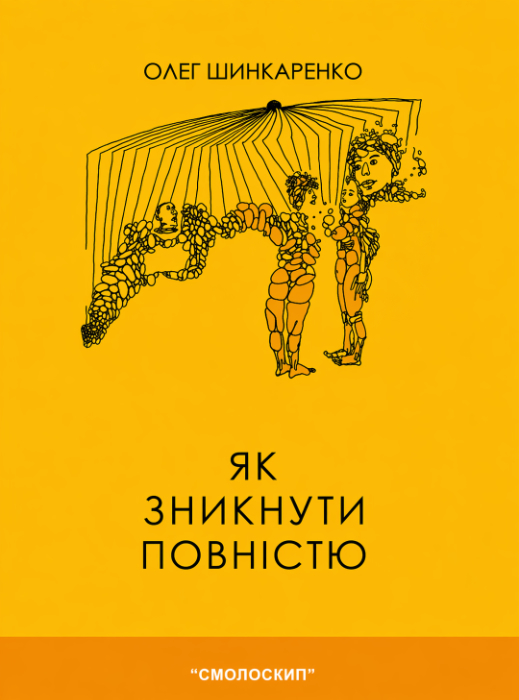
Published: 2006 · Genre: Short Fiction · Original: Як зникнути повністю
Award: Smoloskyp Literary Award 2006
Short Fiction Surrealism Ukrainian Literature
Small ruptures in the fabric of the ordinary — a debut that tests how far language, form, and the reader's sense of stability can bend.
There is a particular kind of debut that arrives not as an introduction, but as a quiet provocation — a book that seems less interested in announcing a new voice than in testing how far that voice can bend language, form, and the reader's sense of stability. Oleh Shynkarenko's How to Disappear Completely (Як зникнути повністю), winner of the 2006 Smoloskyp Literary Award, belongs to that rarer category: a collection of short fiction that feels at once intimate and estranging, playful yet faintly menacing.
Shynkarenko writes as if reality were a thin surface constantly threatening to tear. His stories rarely begin with spectacle; instead, they drift in on the familiar — a conversation, a relationship, a memory — only to tilt, subtly at first, toward something disquieting. In one standout story, a man becomes obsessed with the idea that he can gradually erase himself from the world by shedding habits, relationships, even language. What begins as a philosophical exercise turns into a chilling experiment in self-annihilation, rendered with a restraint that makes its conclusion all the more unsettling.
Elsewhere, Shynkarenko demonstrates a sharp, almost satirical eye. A story centered on a seemingly ordinary couple unravels into a surreal anatomy of dependency, where emotional intimacy becomes literal entanglement — bodies, identities, and desires collapsing into one another. The effect is grotesque and tender at once, recalling the uneasy territory between love and dissolution.
Several pieces in the collection flirt with absurdism, though never gratuitously. In one, a character navigates a bureaucratic system that appears to govern not documents but existence itself, issuing permissions for memory, identity, even presence. The humor here is dry, almost offhand, but it carries an unmistakable echo of post-Soviet anxieties — systems that persist beyond logic, shaping lives in ways both invisible and inescapable.
What distinguishes How to Disappear Completely is not just its conceptual ambition but its tonal discipline. Shynkarenko resists the temptation to explain. His prose — spare, controlled, occasionally lyrical — leaves space for ambiguity, trusting the reader to sit with discomfort rather than resolve it. If there is a through line, it is the fragility of selfhood: how easily it can be altered, erased, or absorbed by others.
For a debut, the collection is strikingly assured. It does not offer a unified worldview so much as a series of carefully constructed disturbances — each story a small rupture in the fabric of the ordinary. Winning the Smoloskyp Award seems, in retrospect, less a recognition of promise than an acknowledgment of arrival.
Shynkarenko's characters often seek escape — from relationships, from systems, from themselves — but the book's deeper suggestion is more unsettling: disappearance is never clean. Something always remains, whether memory, trace, or the faint unease carried by the reader long after the final page.